
Understanding the Ontario Residential Property Application Form

The Ontario Residential Property Application Form is crucial for accessing vital financial assistance programs, like the Ontario Trillium Benefit (OTB) and Ontario Senior Homeowners Property Tax Grant (OSHPTG).
This form streamlines the process of claiming rebates and credits designed to alleviate the financial burden of property taxes and energy costs for eligible Ontario residents.

Overview of Property Tax in Ontario
Property tax in Ontario is a primary source of revenue for municipal governments, funding essential public services like schools, infrastructure, and emergency services. The amount of property tax a homeowner pays is calculated based on the assessed value of their property, as determined by the Municipal Property Assessment Corporation (MPAC).
This assessed value is multiplied by the municipal tax rate, which varies depending on the location and the services provided. Understanding this system is vital when completing the Ontario Residential Property Application Form, as it directly impacts eligibility for various rebates and credits. The Ontario Trillium Benefit (OTB) and Ontario Senior Homeowners Property Tax Grant (OSHPTG) are designed to offset these costs for qualifying individuals. Property tax rates are subject to change annually, so staying informed is crucial for accurate financial planning.
Furthermore, property taxes contribute significantly to the overall financial health of Ontario communities.
The Ontario Trillium Benefit (OTB) — A Key Component
The Ontario Trillium Benefit (OTB) is a crucial, refundable tax credit for Ontario residents, playing a significant role in assisting with energy costs and providing relief from both sales and property taxes. It’s a key component when considering the Ontario Residential Property Application Form, as many residents utilize it to reduce their overall expenses.
The OTB is designed to help low-to moderate-income individuals and families. Eligibility is determined through income thresholds and household circumstances. Applying through the designated form ensures access to these vital funds. The fiscal year for the OTB begins in July, impacting application timelines and benefit distribution.
Receiving the OTB can substantially ease the financial burden of property ownership in Ontario, making it a valuable resource for eligible homeowners.
Eligibility Criteria for the OTB
Eligibility for the Ontario Trillium Benefit (OTB) is primarily based on income. The benefit targets low-to moderate-income Ontario residents. Specifically, individuals receiving benefits like the Guaranteed Income Supplement (GIS) or Ontario Disability Support Program (ODSP) often automatically qualify, simplifying the application process linked to the Ontario Residential Property Application Form.
If co-owning a property with someone other than a spouse, all owners must be receiving GIS or ODSP to qualify for the property tax rebate portion of the OTB. Income thresholds are adjusted annually, so applicants should verify current limits when completing the form.
Understanding these criteria is vital for determining if you’re eligible to receive this valuable financial assistance, reducing property tax and energy costs.
Ontario Senior Homeowners Property Tax Grant (OSHPTG)
The Ontario Senior Homeowners Property Tax Grant (OSHPTG) provides financial relief to eligible senior homeowners, lessening the burden of annual property taxes. This grant is often applied for concurrently with the Ontario Trillium Benefit (OTB) using the Ontario Residential Property Application Form, streamlining the process for seniors.
To qualify, applicants must be 65 years or older, own and reside in the property as their primary residence, and meet specific income criteria. The maximum grant amount varies and is adjusted periodically.
Applying through the designated form ensures seniors can access this valuable support, contributing to their financial well-being and allowing them to remain in their homes. It’s a key component of Ontario’s support system for its senior population.

Application Process & Required Documents
Applying for property tax rebates involves obtaining the correct form, completing all sections accurately, and submitting it with necessary supporting documentation for verification.
Where to Obtain the Application Form
The Ontario Residential Property Application Form is readily accessible through multiple convenient channels, ensuring ease of access for all applicants. Residents can download the form directly from the official website of their local government, such as the City of Owen Sound or the Corporation of the City of Brampton.
Alternatively, physical copies of the form are often available at local government property tax offices, including locations within Civic Centres. The Canada Revenue Agency (CRA) website may also provide links or information regarding the form’s availability.
It’s important to ensure you are using the most current version of the form, specifically the one designated for the relevant taxation year (e.g., 2025 form for 2026 benefits). Downloading from official sources guarantees you have the correct and up-to-date document for a smooth application process.
Step-by-Step Guide to Completing the Form
Completing the Ontario Residential Property Application Form requires careful attention to detail. Begin by clearly printing all information using black ink. First, provide your personal details – name, address, and social insurance number (SIN) – accurately. Next, specify the taxation year you are applying for, such as 2025 for benefits in 2026.
Carefully review the eligibility criteria for each benefit (OTB, OSHPTG, OEPTC) and check the appropriate boxes indicating your circumstances. If co-owning a property, ensure all owners receiving GIS or ODSP benefits are listed.
Double-check all calculations and ensure all required fields are completed. Incomplete or inaccurate forms may result in processing delays or rejection. Finally, sign and date the form before submitting it according to the instructions provided.
Required Supporting Documentation
Submitting the Ontario Residential Property Application Form often necessitates supporting documentation to verify your eligibility. Generally, a copy of your most recent Notice of Assessment from the Canada Revenue Agency (CRA) is required. This document confirms your income and tax information.
For the Ontario Senior Homeowners Property Tax Grant (OSHPTG), proof of age (such as a driver’s license or birth certificate) may be necessary. If claiming benefits based on receiving GIS or ODSP, include a copy of your benefit statement or official notification letter.
Registered Ontario charities applying for a property tax rebate must provide their registration number and supporting documentation confirming their charitable status. Ensure all copies are clear and legible to avoid processing delays. Keep originals for your records.
Common Mistakes to Avoid on the Application
Completing the Ontario Residential Property Application Form requires careful attention to detail. A frequent error is misreporting income; ensure figures match your Canada Revenue Agency (CRA) Notice of Assessment exactly. Incorrectly calculating property tax amounts or energy costs can also cause delays or rejection.
Many applicants overlook providing necessary supporting documentation, like proof of age for the OSHPTG or charitable registration numbers. Failing to sign and date the form is another common oversight. Double-check all information before submission.
Avoid using white-out or correction fluid; instead, neatly cross out errors and initial them. Ensure your mailing address is current to receive important correspondence. Finally, submitting after the deadline will render your application invalid.

Specific Tax Credits & Rebates
Ontario offers several property tax relief programs, including the Ontario Energy and Property Tax Credit (OEPTC) and rebates for Registered Ontario Charities, enhancing affordability.
Ontario Energy and Property Tax Credit (OEPTC) Details
The Ontario Energy and Property Tax Credit (OEPTC) is a refundable tax credit aimed at assisting low-to moderate-income Ontario residents with the costs of energy and property taxes. This credit is designed to offset a portion of these expenses, making homeownership more affordable for eligible individuals and families.
The OEPTC provides relief on the Harmonized Sales Tax (HST) paid on energy bills, such as electricity, natural gas, propane, oil, and wood. It also offers assistance with property taxes, reducing the overall financial strain on homeowners. The amount of the credit varies depending on your household income, the region you reside in, and your specific energy consumption patterns.
To claim the OEPTC, you must file your annual income tax return and complete the relevant sections pertaining to the credit. Eligibility criteria are based on income thresholds and residency requirements, ensuring that the credit reaches those who need it most. Detailed information and application guidelines are available through the Canada Revenue Agency (CRA) website.
Tax Rebates for Registered Ontario Charities
Registered Ontario Charities are eligible for property tax rebates, offering significant financial relief for organizations dedicated to serving the community. This rebate program recognizes the valuable contributions charities make and aims to reduce their operational costs, allowing them to allocate more resources to their core missions.
To qualify, charities must demonstrate that the property is used solely for charitable activities and meet specific criteria outlined by the City of Owen Sound and provincial regulations. The application process requires submitting a dedicated form, along with supporting documentation verifying charitable status and property usage.
The rebate typically covers a portion of the property taxes paid, and the amount is determined based on the assessed value of the property and the nature of the charitable activities conducted. Applications must be submitted annually by the specified deadline to ensure timely processing and rebate disbursement. Detailed guidelines and forms are available from local municipal offices.
Property Tax and Utility Applications & Deadlines
Property Tax and Utility Applications in Ontario operate on a specific schedule, demanding attention to crucial deadlines. Residents must be aware of these dates to ensure timely submission of applications for programs like the Ontario Trillium Benefit (OTB) and the Ontario Senior Homeowners Property Tax Grant (OSHPTG).
Downloading the necessary forms is readily available online, often through municipal websites. However, knowing when to submit is equally important. Failure to meet the deadlines can result in delayed processing or even ineligibility for the benefits.
Generally, applications for the 2025 OTB and OSHPTG were due by a certain date in 2025, but residents should check for updates regarding the 2026 application period. Staying informed through official government channels and local municipal resources is vital for successful application processing;
Important Dates & Deadlines
Key dates for the Ontario Trillium Benefit (OTB) and related programs are critical; July marks the OTB fiscal year start, impacting eligibility and payments.
Submission Deadlines for 2026 Applications
For the 2026 tax year, understanding the submission deadlines for the Ontario Residential Property Application Form is paramount to ensure timely processing and receipt of benefits. While specific dates can vary slightly, generally, applications for the Ontario Trillium Benefit (OTB) and the Ontario Senior Homeowners Property Tax Grant (OSHPTG) should be submitted well before the end of the calendar year.
Although a precise date for 2026 isn’t yet available, based on previous years, aiming for submission by September 28th, 2026, is a prudent approach. This allows ample time for the government to process applications before the fiscal year concludes. Late submissions may result in delayed payments or, in some cases, ineligibility for the benefits.
Applications can be submitted by mail to the designated municipal address, such as the City of Owen Sound at 808 2nd Ave East, or potentially through online portals if available. Always verify the most current deadline information on the official government websites to avoid any potential issues.
Fiscal Year Start for the Ontario Trillium Benefit
The Ontario Trillium Benefit (OTB) operates on a unique fiscal year that differs from the standard calendar year. Understanding this is crucial when completing the Ontario Residential Property Application Form. The OTB fiscal year commences on July 1st and concludes on June 30th of the following year.
This means that the benefits received during a given period are based on eligibility determined within that July-to-June timeframe. Therefore, when applying in 2026, you are effectively applying for benefits related to the fiscal year that began on July 1st, 2025, and will end on June 30th, 2026.
This structure impacts how you report income and household information on the application. It’s essential to accurately reflect your financial situation as it stood during that specific fiscal year to maximize your chances of approval and receive the appropriate benefit amount. Keep this timeframe in mind when gathering supporting documentation.

Resources & Contact Information
Local government property tax offices, the Canada Revenue Agency (CRA), and various online tools offer support for the Ontario Residential Property Application Form.
These resources provide assistance with inquiries, form completion, and property tax estimations.
Contacting Local Government Property Tax Offices

Directly contacting your local municipal property tax office is a vital step when navigating the Ontario Residential Property Application Form process. Each city and town in Ontario manages its property tax administration independently, meaning contact methods and specific procedures will vary.
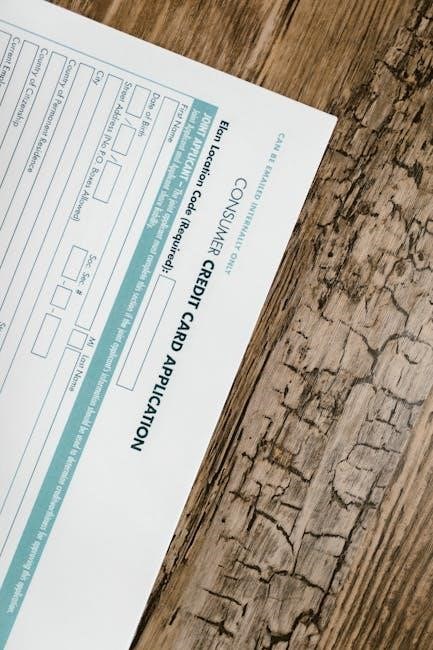
Generally, you can find contact information – including phone numbers, email addresses, and physical mailing addresses – on your municipality’s official website. For example, the Corporation of the City of Brampton provides a mailing address at 2 Wellington Street West, Brampton, ON L6Y 4R2. Many municipalities also offer 24/7 access to information online.

When reaching out, be prepared to provide your property assessment roll number and any relevant details about your application. Local offices can assist with questions regarding eligibility, required documentation, and the status of your application. They are your primary point of contact for localized support and clarification regarding property tax matters in Ontario.
Canada Revenue Agency (CRA) Resources
The Canada Revenue Agency (CRA) plays a significant role in administering several benefits related to the Ontario Residential Property Application Form, particularly the Ontario Trillium Benefit (OTB) and the Ontario Energy and Property Tax Credit (OEPTC). While applications are often submitted through municipal channels, the CRA handles the actual benefit distribution.
The CRA website (canada.ca) provides comprehensive information about these credits, including eligibility criteria, benefit amounts, and how to claim them on your annual tax return. You can access detailed guides, frequently asked questions, and online tools to estimate your potential benefits.
Furthermore, the CRA offers various support channels, including phone lines and online chat, to assist with specific inquiries. Remember to retain copies of all application forms and supporting documentation for your records, as the CRA may request them for verification purposes. Utilizing CRA resources ensures accurate and efficient processing of your benefits.
Online Tools & Calculators for Property Tax Estimates
Several online tools and calculators can assist Ontario homeowners in estimating their property tax liabilities and potential eligibility for rebates related to the Ontario Residential Property Application Form. Municipal websites frequently offer property tax calculators, allowing you to input your property’s assessed value to estimate taxes before receiving a bill.
Additionally, third-party websites provide property tax estimation services, though accuracy may vary. These tools can be helpful for budgeting and understanding how changes in assessed value impact your tax obligations. Remember these are estimates; the official tax amount is determined by your municipality.
Exploring these resources can help you proactively manage your property tax finances and determine if you qualify for programs like the Ontario Trillium Benefit or Ontario Senior Homeowners Property Tax Grant, streamlining the application process.
Be the first to reply